Sunday, February 13, 2011

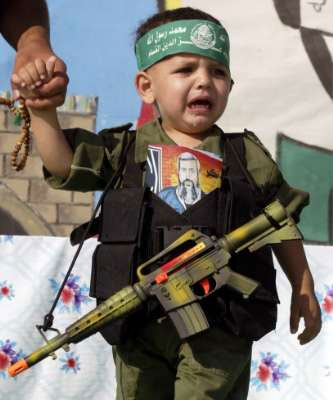
Letter from Hamas

Dear Victim,

I am writing this letter to you, though I know you have passed away and you are now sitting with Allah. I am writing this letter so that you know my intentions. I did not want this nor ask for this. I know you were just playing when you were hit by an explosion. I understand that I do not reject to this resistance. Yet, you must know that you are a casualty of war, and I never intended it to be you.

I became involved in your experience because I am the leader of this country. I run the government that is supposed to protect its children. Though, I am not the one who has oppressed your family, and killed you, I feel sadness in the fact that I cannot protect you. Everything here has gotten so out of control. And so many people believe in the resistance it would be political suicide for me to stand up against it, especially when I believe in resistance, and have formulated my power off of resistance. I hope you understand because I once was too like you: just a boy with a dream.

I have taken this stance because the truth is there are too many conflicting opinions. I do not stop my soldiers from attacking those standing out against my regime because they are trying to hurt my career. I do not allow street vendors on the street because I have to show my power to the people. I choose to not allow people to pray in the street because they are doing it to lessen that power, to stand up against me, not to stand up for Allah. I allow resistance to fight and kill because even though they do not follow my commands, they are not against me or what I represent. I have bigger things to worry about and focus on, like trying to create policies that the people will hear, agree with, and listen to.

I hope to lead this country to a place where there is no resistance to the government. Where there is no Fatah. I hope to make it so that people just listen, carry out my orders, and innocent children do not die. I hope that we become the highest power in the world, and where others do not step out and mock neither our existence, nor our faithfulness for Allah.

With me in power we can work towards justice: a peace in our communities, where people are able to understand what I am attempting to do. If people would just listen, this violence can stop and we could all have happiness again. In the future people will no longer live in fear, because they will have me by their side. They will support me for what I am trying to represent, and for the peace I will bring. I know you will not be here to see this peace, and for that I am truly sorry.

Sincerely,
Marta Simmons
(acting as Hamas the leader
of the Islamic gov).


Image Reference
Hamas. (2006). [Web]. Retrieved from http://www.blogdemagog.com/images/hamas.jpg

Sunday, January 30, 2011

Transitional Justice to Me


Introduction
Often you hear that history repeats itself. To me transitional justice is the type of justice that attempts to stop just that. Instead, transitional justice protects citizens from undergoing the same brutalities from the past protecting them now and in the future. It is protection through laws, which help people feel security and that aids them for future success. Louis Bickford (2004) describes justice in the article Transitional Justice as “[it] refers to a field of activity and inquiry focused on how societies address legacies of past human rights abuses, mass atrocity, or other forms of severe social trauma, including genocide or civil war, in order to build a more democratic, just, or peaceful future” (p. 1045).

My Small Societies
The society I am going to focus on is my family unit. Though it is small it runs much like a society. In this society everyone has their own role. My great grandmother used to be the head of the family. She dealt with everyone, was able to iron out the conflicts, made sure the family always came together, made sure everyone was okay. When my great grandmother passed away the family did not run as smooth as it used to. In my household (sub society) my fiancé is the one who takes care of the business, while I take care of the household. When there is conflict, the family does not run smooth, which causes more difficulty in getting things done. In the main society conflicts arise from the members who are not following the rules of the family. Those getting in trouble with the law are often treated more like outcasts. In the sub society, my home life, conflict arises when power is questioned. Different conflicts that may arise are questions about: who should make the decisions, how do you divide decision making, and who is right and wrong? Often people’s separate beliefs and feelings are what can cause a fire to spread. Bernard S Mayer describes communication as a main reason for conflict in the book _The Dynamics of Conflict Resolution_, “[h]umans are very imperfect communicators. Sometimes this imperfection generates conflict, whether or not there is a significant incompatibility of interests, and it almost always makes conflict harder to solve. When trying to understand transitional justice it is important to understand both conflict and peace. When trying to understand transitional justice, it is first crucial to understand conflict. Conflict is what causes the need for transitional justice”. In my family structure this is the main cause of conflict. Communication is often replaced by miscommunication, and something that is nothing can be made into an immense conflict.

Conflict
One conflict that had been raised before is how my fiancé and I communicate with each other. Sometimes I think he speaks to me too harsh, and he thinks that I am way too overly emotional. When we say something to each other often it is misconstrued. It can especially be misconstrued when one or both of us are angry. I will often think that something he says is rude, and he often says, “I did not say that”. Sometimes we will realize that the whole conflict began because I thought he said something when he actually didn’t exactly mean that. Other times it can happen when reading beyond words or a statement. Often, this can cause conflict, and sometimes can be needless.

Most conflict in the family unit begins when there is a power struggle, or there are differences of opinion and emotion. My fiancé is a person who likes to have control. I am not as much of a leader as he is, but sometimes, I feel like taking the lead. Conflict may arise because he is so use to being the head of the family. I am a very emotional person, who holds strong opinions. My fiancé is a very unemotional person. Conflict can arise when I hold strong passions about my emotions, and my feelings get hurt by statements that may lack feeling or concern. Mayer describes how conflict can come about over feelings, and often the start of the conflict or the disagreement cannot even be identified. This describes my family “society” completely. My feelings often get in the way of rationalization. When I am angry or emotional I cannot rationalize my thoughts, and the anger and emotion is only the flame to the fire that grows. When arguing, the argument can truly be about something that does not even matter, but I can argue about it like it is the most important thing in the world (to me, at the moment, it is).

Global Conflict Map
In the interactive map, global conflict often arises because of disagreement or lack of power. One example of this was Columbia in 1899 to 1903. 100,000 people died because of the disagreement between conservatives and liberals. The difference between global conflict and small societal conflict is that the result may end in war. It is a travesty that 100,000 died over conflict or a war on change. Similarities are that conflict arises when people’s voices are not being heard and when their basic necessities are not being given to them. This supports what Peace Pledge Union stated about conflict in _Understanding Conflict, Understanding Peace_, “[h]uman beings have basic needs. Everyone needs to be recognized as an individual with a personal identity; everyone needs to be able to feel safe. If these needs aren't met, people protest, and protesting can lead to rebellion and violence”. All conflict is important, not only so that there can be change, but it is important to meet needs of the society. When conflict arises people can die, which also makes all conflict dangerous. It is crucial that there is as much peace as possible and that as many people are able to meet their needs as possible.

Peace
Peace is very important to me. It is important that there are avenues that can create resolution. Sometimes I feel like without a resolution I cannot accomplish peace of mind. Without finding an answer to the conflict I feel as if it will happen again, or never truly end. Peace is important because when conflict arises so can stress, sickness, and sadness. Communication skills could be the support necessary to resolve conflict in my family. Learning to communicate and listen to each other’s needs could be very helpful in the long run. The optimal end result is for both of us to have our needs met. For us both to feel content, and that we are heard. Globally, I think this concept could also be explored. Communication is the key to understanding each other. It is crucial that every member of society receive their basic needs.

REFERENCES
Bickford, Louis. From The Encyclopedia of Genocide and Crimes Against Humanity (Macmillan Reference USA, 2004), vol. 3, pp. 1045-1047. Reproduced with permission
Mayer, B. The Dynamics of Conflict Resolution: A Practioner's Guide.
Nobel Media. (Designer). (2011). Conflict map. [Web]. Retrieved from http://nobelprize.org/educational/peace/conflictmap/conflictmap.html
Peace Pledge Union. (2001). Understanding conflict, understanding peace. Retrieved from http://www.ppu.org.uk/

IMAGE REFERENCE
Patel, Ana. (Photographer). (2008). Ddr and transitional justice. [Web]. Retrieved from http://www.ictj.org/en/research/projects/ddr/index.html

Saturday, November 27, 2010

What is Research to Me?


The most significant experience, for me, throughout the semester was the interview. I was able to select my participant, and design my questions. I learned that you cannot design your questions to make your participant answer in a certain way. You must instead have neutral questions that still answer what you need to know for your research. What surprised me the most about the interview was how smoothly I was able to transition from question to question. I also surprised myself by not getting too nervous. The interview helped my overall understanding of research method through comprehending how you choose your participants or sample. Everyone should have the opportunity to be chosen.

Research now means that we look for answers to understand and increase our knowledge about the world. My definition of research has changed somewhat. I always knew that research helped to advance our understanding, but at one point I felt it was more about looking into the past to change our actions for the future. Now I know that research does not only have to be applied historically.

The practical application of research in the “real world” in my opinion is solving problems. It can be at work, home, or anywhere. It may be researching what steam cleaner to buy in order for you not to lose your money. It may also be about researching how to higher your credit score, looking for honest sources. Everyday conversation can turn into an interview and have a purpose. Whether you are discussing what teacher to take next year (and why) or whether you are discussing what doctor not to go to. Research is used with us every day. That is why it is important to learn how to be partial, and not influence a person to answer a certain way: learning how to listen. Learning how to research is crucial because we utilize it, without knowing, all the time.

My current strengths are finding information. I am really good at historical research, and finding academic journals that help support my claim. I am able to easily find needed sources, and compare and contrast. My weakness would be organizing, though I have improved on it this semester. I sometimes get overwhelmed by all the sources, and my paper does not always have an easy flow to it; this is where I would like to improve.

Overall, my challenge for the next year and a half at ASU is to continue to improve not only on my writing, but also on my research. I can improve by constantly reviewing what I write and not procrastinating. Understanding the concept is the first step. Finishing what you understand, and helping others understand what you are trying to portray is important too. As long as I continue working hard, and constantly advancing in my writing: I too will be able to progress in my research.

Sunday, November 14, 2010

Data Organization


In my research project interpreting data is not an easy task. The main theme which will be drawn together is juvenile waiver and rates of recidivism. Recidivism rates are crucial to focus on because it is the problem that will be answered in my project. An important thing to focus on while interpreting the results is to not jump to over presumptuous conclusions. It is important that I truly understand my data for exactly what that data is.

While organizing my data it is important that I exemplify the data found to the reader. It is also crucial that it is easy to compare and contrast each set of data. Comparing data can demonstrate how efficient or inefficient a certain recidivism program or waiver is on the juveniles. It can also help the reader envision the results.

Using graphs as an organization and presentation technique is the best way to demonstrate the data in a report. It takes simple or complex data and puts that data into a visual picture. My readers will be able to see whether, in certain circumstances, waiver has an effect on juveniles committing more crimes. It will demonstrate and compare all data I find.

While presenting the information through graphs, I will also follow with explanations of each graph. I will explain where I found my findings. I will also interpret my findings to the reader. I will answer my research question, and interpret weather or not my hypothesis is correct.

Though data is not easy to organize, present, or interpret; when using techniques it will help my report to be clear and concise. Organization will also aid with the flow of the report. It will allow the reader to be able to easily follow without confusion. Organization of data is crucial to the success of a report.

References:
Leedy, P., & Ormrod, J. (2010). Practical Research: Planning and Design (9 ed.). New Jersey: Pearson.

Mrs. Meacham's Classroom Snapshots. (2003). Retrieved November 10, 2010 from Graph of the Week/Day: http://www.jmeacham.com/math/graph.of.the.week.htm.

Sunday, October 17, 2010

Interview


In order to completely understand the juvenile system, I felt like an interview would be essential. The person I chose to interview was a correctional officer at a facility that housed both adult and juvenile inmates. He was also a patrol sheriff’s officer for Lafayette Parish. He has a lot of experience dealing with adult criminals and juvenile delinquents. The interview was conducted in person on October 15th at 12:30pm.

Q1: What type of correctional facility did you work at?
A1: “One that houses adults, juveniles, and both men and women.”
Q2: Was your facility mainly adults or juveniles?
A2: “Mainly adults.”
Q3: When did you begin working at the correctional facility?
A3: “September of 2004.”
Q4: How long did you work there for?
A4: “One Year in the correctional facility and eight months on patrol.”
Q5: What first made you work at the facility?
A5: “I was a criminal justice major, I wanted to work in the field, and needed a good job.”
Q6: How do you feel about juvenile waiver?
A6: “I think that it is sometimes acceptable depending on the type of crime in which the juvenile committed.”
Q7: When you worked in the Correctional Facility did you run into juveniles?
A7: “Yes.”
Q8: Was there any difference dealing with these juveniles, than dealing with the adults?
A8: “Yes, the juveniles had a false sense of reality and the consequences for their crimes. The juveniles were also usually more rowdy and higher strung.”
Q9: What type of programs, if any, did your facility offer for the juveniles whom were incarcerated?
A9: “They were able to be evaluated by the jail psychologist and they were also offered medical care. They were not allowed too many programs because there was not enough time in the day to get their programs in because they were not communally integrated with the adult inmates until 18.”
Q10: How do you feel about the fact that they were not allowed enough programs because of the lack of time?
A10: “I feel like it wasn’t the juveniles fault, but I think that the safety of the inmates and staff are above anything. You don’t want to have people get injured or killed, nor have staff lose their jobs because of integration of juveniles and adults.”
Q11: What differences, if any, were there between how the correctional officers treated the juveniles and how they treated the adults?
A11: “The juveniles often listened to the officers more and often wanted to contact their family. The juveniles always needed someone to talk to in order to keep their sanity. The adult inmates were not as needy. ”
Q12: How often, if at all, did you see juveniles released from your facility once again incarcerated?
A12: “Very often, it seemed like they did not have as much regard for the law, but once they turned 18 you would not see them back as soon. Some juveniles would come back within a week, where you might see an adult inmate come back six months later.”
Q13: Do you feel like there was anything that your facility did to help lessen the juveniles’ chances of recidivism?
A13: “No, I do not. The programs they were able to take were self-improvement programs, but they were not programs the juveniles could relate with or programs that would make them change their lives around.”
Q14: What type of difficulties, if any, did you run into when dealing with juveniles in a facility made mainly for adults?
A14: “Being able to give them full access to the prison, just like you would with an adult prisoner.”
Q15: Why were they not allowed to mingle with the adult prisoners?
A15: “Because it would be a liability, if anything happened to them. It is against the correctional facilities procedure, and the juveniles would probably be attacked by some of the adult inmates because of their vulnerability.”
Q16: Is there anything different that you would have liked to see done with the juveniles in your facility?
A16: “Just more programs and counseling to help them improve on themselves”.
Q17: Is there anything you would like to add to this interview?
A17: “That if someone commits a criminal act, they should serve time.”
Q18: What are your impressions of this interview?
A18: “It is informative.”

From this interview I learned that the system in place to help juvenile inmates is not working at this specific facility. The fact that juveniles leave and then come back within a week shows the juveniles need for better programs. I was also able to get a better understanding of the struggles an adult facility has while dealing with juveniles. It was important to fully understand the juveniles’ special needs, especially for mentors and people they could talk to. I see now, these juveniles need more programs they can relate to and programs that will help them have a better reverence for the law.

The interview went very smooth. I feel like I planned out my questions well, and was able to create more questions as I went along. I was very surprised that I did not shell up from shyness. I think that planning out the questions helped with that, and the fact that I was the one doing the interview. I also felt that asking basic questions at the beginning of the interview helped with the more difficult questions by the end.

I could improve future interviews for research purposes by learning how to create even more informative questions. I could also dig a little deeper. I should not be afraid to find out all the details of a subject. Learning how to create the perfect questions would help a lot with that. I think for my first interview I did really well, but my next interview will be even better.

Image Reference
De Luca, J. (2010). Vogelsang House Blog. Retrieved October 15, 2010 from Pod Press, Dalton Blogs: http://blogs.dalton.org/​vogelsang/.

Monday, September 13, 2010

Literature Review Juvenile Waiver


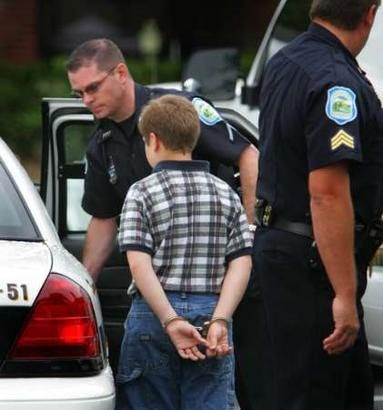
Juvenile waiver is the transfer of adolescents from the juvenile justice system to the adult court. I am choosing to research adolescents who commit crimes because of their vulnerability and possible need for rehabilitation. There is a lot of debate among scholars about the necessity of juvenile waivers. In my research I found two main camps, those who support waivers due to an increase of young violent offenders and those who are against juvenile waivers because of the inconsistencies of the system.

In one view scholars believe juvenile waiver is an issue because it does not prevent criminal activity. It weakens the juvenile justice system; especially, when there is not necessity because of lack of fluctuation in juvenile criminal activity. There is not enough research showing that juvenile waivers reduce recidivism, and therefore the process should not be in place (Wu 18; Steiner 6). Other scholars stand against juvenile waiver because of the lack of consistencies in the crimes, sentences, and reasoning for the waiver (Fagan 347; Freitas 329; Anders 227).

Many inconsistencies exist within waivers, and therefore many scholars oppose waivers. Inconsistencies within the waiver process was exemplified by Anders, “Two children, both fifteen years old, are charged with a crime. One child is tried as a juvenile and receives a five-year-sentence in a juvenile facility that has extensive rehabilitation programs. The other child, tried as an adult on the same charge, is sentenced to serve fifteen years in prison and forever branded with the stigma of being a convicted felon.” (p. 227). Does juvenile waiver truly prevent crime? To prevent crime society would have to change: including and not limited to the health system, regions, and lack of adolescent jobs (Merlo 11).

Views for juvenile waiver point out the impact of violent crime and youth that cannot be rehabilitated. One interpretation is that violent juveniles may overflow juvenile institutions causing havoc and hurting the rehabilitation process for adolescents who committed simple crimes (Clement 216). Waiver would be acceptable with adolescents that have high recidivism rates because all options and resources have been exhausted (Barnes 134).

In framing this debate on whether juvenile waiver to adult court is positive we lose incite that every case is different. Yet, in this debate what is lost is whether or not it is ethical to waive juveniles to adult court. Many scholars forget to mention the conditions prisons create for juveniles. There is no real protection from victimization, rehabilitation, and learning how to commit new and more precise crimes. What these scholars lacked in their arguments are whether or not these circumstances affect juveniles to have a lower or higher recidivism rate, and whether or not it deters other youth from committing adult crimes.

In my research, I need to find more information on the effects of the waiver process. In order to determine if juvenile waiver is ethical, I need to understand if it useful in society. I would also like to find more stories about children that went through adult court and children that went through the juvenile justice programs. I would like to merge all my research together to determine if the majority of recidivism happens using waivers, not using waivers, or if there is no difference.

REFERENCES

Anders, J. L. (2005). Bad Children or a Bad System: Problems in Federal Interpretation of a Delinquent's Prior Record in Determining the Appropriateness of a Discretionary Judicial Waiver. [Electronic version]. Villanova Law Review, 50, 227-238.

Barnes, C. W., & Franz, . S. (1989). 'Questionably adult: Determinants and effects of the juvenile waiver decision'. [Editorial]. [Electronic version]. Justice Quarterly, 6, 117-135.

Clement, M. J. (1997). A Five-Year Study of Juvenile Waiver and Adult Sentences: Implications for Policy. [Electronic version]. Criminal Justice Policy Review , 8, 201-219.

Fagan, J., & Deschenes, E. P. (1990). Determinants of Judicial Waiver Decisions for Violent Juvenile Offenders. [Electronic version]. The Journal of Criminal Law & Criminology, 81, 314-347.

Freitas, S. (1995). Extending the Privilege against Self-Incrimination to the Juvenile Waiver Hearing. [Editorial]. [Electronic version]. The University of Chicago Law Review, 62, 301-329.

Merlo, A. V., PH.D., Benekos, P. J., PH.D., & Cook, W. J., PH.D. (2009). ‘GETTING TOUGH’ WITH YOUTH Legislative waiver as crime control. [Electronic version]. Juvenile and Family Court Journal, 48, 1-15.

Steiner, B., MA, & Hemmens, C. J., PH.D. (2009). Juvenile Waiver 2003: Where Are We Now? [Electronic version]. Juvenile and Family Court Journal, 54, 1-24.

Wu, B., PH.D. (2009). Determinants of Public Opinion Toward Juvenile Waiver Decisions. [Electronic version]. Juvenile and Family Court Journal, 51, 9-20.

IMAGE REFERENCE

Hand cuffs and Kids. (2005). Retrieved September 14, 2010 from flightpundit: http://flightpundit.com/​archives/​2005/​04/​26/​hand-cuffs-and-kids/.